
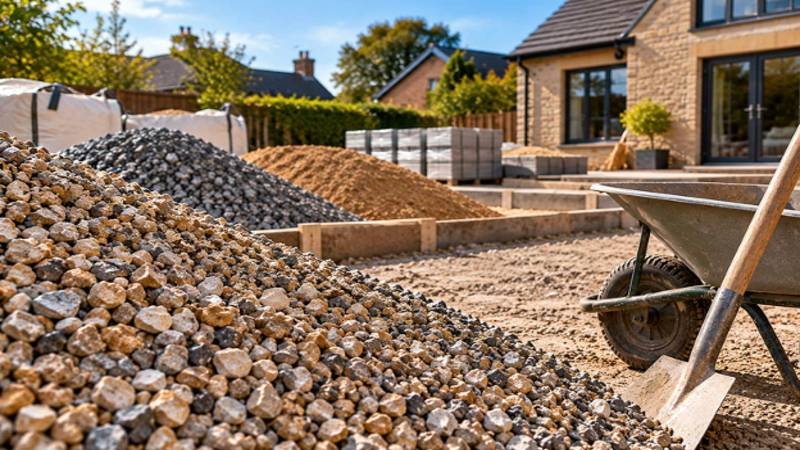
When you are designing your perfect outdoor space, decorative garden aggregates from Mainland Aggregates give a simple and effective way to create a natural flow in the garden. They define individual areas while seamlessly blending adjacent spaces together.
Not only are they simple to lay and maintain, but they are also fully functional as a way of suppressing weeds and unwanted growth. Available in a vast spectrum of beautiful colours and textures, they bring light, structure, and vibrancy to any garden layout.
Key Summary
- Transform Your Outdoor Space – Discover how decorative aggregates can instantly upgrade tired flower beds, pathways, and patios with minimal maintenance.
- Endless Design Versatility – Explore a huge selection of colours, textures, and sizes—from sleek slate and contemporary granite to warm Cotswold chippings.
- Low-Maintenance Gardening – Suppress weeds, retain vital soil moisture, and wave goodbye to constant mowing and weeding.
Breathing New Life Into British Gardens
British gardens are as diverse as any in the world. They range from compact urban courtyards that breathe life into city living to sprawling country gardens that balance formal entertainment areas with practical growing spaces.
Decorative aggregates bypass the ecological and aesthetic drawbacks of synthetic lawns, opening the door to a vibrant palette of natural shades and tactile textures that bring enduring beauty to our outdoor spaces while keeping upkeep to a minimum.
Why Choose Decorative Aggregates?
Decorative aggregates bring unique, practical benefits to UK gardens. They effortlessly solve moisture and soil management issues that many gardeners struggle with on a daily basis. While natural lawn has its place, it comes with a constant need for feeding, edging, and mowing.
When used around flowerbeds and planted borders, decorative stones serve as an essential moisture buffer. During heavy British downpours, a gravel layer slows and dissipates rainfall, giving the ground beneath a chance to absorb water at a manageable rate and preventing surface runoff or unsightly soil erosion. Conversely, during hot summer spells, the stone layer acts as protective mulch—limiting evaporation and helping soil retain moisture to keep plants from wilting.
When laid on a quality landscape membrane, decorative aggregates create an aesthetically pleasing, long-term weed suppressant. Unlike organic wood chippings, stone does not break down, rot, or fade quickly over time, making it a cost-effective, low-maintenance investment for long-term garden design.
Popular Styles and Types to Suit Every Garden Design
With a diverse range of materials available, choosing the right aggregate allows you to tailor the exact look, feel, and functionality of your space:
- Slate Chippings – Sleek, flat, and modern. These are ideal for contemporary borders, gravel gardens, and around water features as they deepen in colour when wet.
- Cotswold Chippings & Buff Gravels – Warm, traditional, and inviting. These cream and golden tones are the perfect surface for classic cottage garden paths and relaxed patio borders.
- Flint & Hard Granite – Hard-wearing, inter-locking angular stones that stay in place and handle high footfall or vehicular traffic brilliantly on driveways and main pathways.
As property experts note, choosing the right aggregate style is key to modern landscaping, which is why decorative aggregates are becoming essential in property design for enhancing the look of your finished project.
How to Calculate Quantities
Taking a practical, methodical approach to measuring and preparing your site is essential for long-term durability and a professional finish.
1. Measuring & Calculating Quantities
To work out how much aggregate you need, follow this simple formula:
Calculate Surface Area: Multiply the length by the width of the area in metres to find the total square metres (m2).
Example: A path 6m long2m wide=12m2.
Determine Depth: For general decorative borders, paths, and flowerbeds using small chippings (10mm to 20mm), aim for a depth of 40mm to 50mm (0.04m to 0.05m). Driveways require a slightly deeper layer of around 50mm to 75mm.
Calculate Volume: Multiply your square metre area by the depth in metres.
Example: 12m20.05m depth=0.6 cubic metres (m3).
Convert to Bags: As a rule of thumb, one standard bulk bag (approx. 850kg) yields roughly 0.6m3 and will cover 10to12m2 at a 50mm depth. For smaller areas or top-ups, smaller 20kg to 25kg handy bags are ideal.
2. Ground Preparation
Ground preparation is the most critical stage of laying aggregate, yet it is completely hidden once the project is complete. Preparing the base correctly makes or breaks the durability of the project:
- Clearing – Methodically clear away all existing weeds, turf, and topsoil down to a stable base layer.
- Levelling – Level the sub-grade evenly, taking care to factor in the total depth of your aggregate so the finished gravel sits flush with surrounding edging, paved areas, or turf.
- Membrane Installation – Before spreading stone, lay a heavy-duty, needle-punched or woven geotextile membrane. Overlap joints by at least 100mm to stop weeds pushing through and prevent your aggregate from mixing with the soil below over time.
Sourcing materials from a specialist supplier makes all the difference when executing your plans. Decorative garden aggregates from Mainland Aggregates offer a comprehensive range of high-quality stone products tailored for UK landscaping projects.
Decorative gravel and garden aggregates offer a stylish, durable alternative to high-maintenance lawns and paved areas. When properly installed permeable aggregate surfaces comply with official GOV. UK Sustainable Drainage Systems (SuDS) standards, helping prevent surface water runoff while enhancing the natural beauty of your outdoor space. See more.
Frequently Asked Questions (FAQs)
How deep should I lay decorative aggregates?
Lay 40mm to 50mm for borders and paths, or 50mm to 75mm for driveways and high-traffic areas.
Do I need a weed membrane underneath?
Yes. A membrane prevents weeds from taking root below and keeps your stones from sinking into the soil.
Are decorative aggregates pet-friendly?
Yes, but choose smooth pebbles or river rocks rather than sharp angular chippings to protect sensitive paws.