
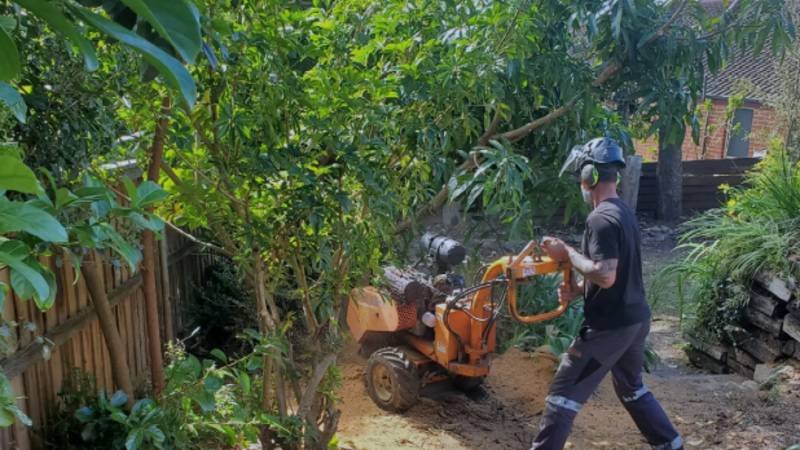
Stump grinding is commonly used after a tree has been removed, particularly when the remaining stump is taking up valuable garden space or interfering with future landscaping. While the visible stump can be ground below the surrounding soil level, homeowners often wonder what happens to the much larger root system underneath the ground.
In most cases, stump grinding does not remove every root. Instead, the main stump and accessible portions of the root flare are mechanically ground into smaller pieces. The remaining underground roots are generally left in place. Consulting Sydney stump grinding specialists can help homeowners understand what may happen to the remaining roots and how the area can be prepared for its intended future use. What happens next depends on factors such as the tree species, size of the root system, soil conditions and whether the tree is capable of producing new growth.
Most of the Root System Remains Underground
A mature tree can have an extensive root system spreading well beyond the visible stump. Removing every root would often require significant excavation and could disturb large areas of the surrounding garden. For this reason, stump grinding generally focuses on the stump and major roots close to the surface rather than extracting the complete root system. The grinding depth can vary depending on the equipment, site conditions and plans for the area.
Once the stump has been reduced below ground level, the resulting space can usually be filled with an appropriate material and incorporated back into the surrounding landscape. Large surface roots may sometimes need additional attention if they interfere with paving, lawn areas or planned landscaping. Before work begins, it is useful to explain how the area will be used afterwards. Preparing a site for lawn may require a different approach from preparing it for construction, paving or substantial new planting.
Remaining Roots Usually Decompose Gradually
Once a tree has been removed, its root system no longer receives the same supply of energy produced by the leaves. For many trees, the remaining roots gradually die and decompose underground. This process can take considerable time, particularly when the original tree was large. Soil organisms, fungi and other natural processes gradually break down the woody material.
There is usually no need to excavate the entire garden simply to remove every decomposing root. In many situations, allowing the roots to break down naturally causes far less disturbance than attempting complete extraction. However, decomposition can change the soil over time. As larger roots decay, small underground spaces may develop. Soil can gradually settle into these areas, which may occasionally result in minor depressions at the surface. Monitoring and topping up the soil where necessary can help maintain the finished level of a lawn or garden bed.
Some Trees May Produce New Shoots
Stump grinding usually stops the original trunk from continuing to grow, but some tree species can produce new shoots from surviving roots. These shoots are sometimes known as suckers. The likelihood of regrowth varies considerably between species and individual trees. Some root systems die without producing noticeable new growth, while others can send shoots up some distance from the original stump. If shoots appear, repeatedly cutting the visible growth may not immediately eliminate the underlying root system.
Homeowners who are concerned about regrowth should identify the tree species where possible and discuss the issue before stump grinding. It is also important to distinguish genuine root suckers from unrelated seedlings growing nearby. Monitoring the area after tree and stump removal can help identify whether additional management is necessary.
Replanting in Exactly the Same Spot Can Be Difficult
After stump grinding, homeowners may want to replace the removed tree immediately. Planting directly in the exact location of a large former stump can present challenges. Even when the stump has been ground below the surface, substantial roots and woody material may remain underground. As this material decomposes, the soil structure can change.
The ground may also contain a mixture of soil and wood chips from the grinding process. Large quantities of fresh woody material mixed into the planting area may not provide ideal conditions for establishing some new plants. Depending on the site, it may be preferable to position a replacement tree away from the centre of the old stump. The appropriate distance depends on the available space, remaining roots, new species and intended landscape design. If planting another substantial tree, consider its mature size rather than selecting a position based only on the size of the young plant.
Landscaping Plans Should Be Considered Before Grinding
How the area will be used after stump removal can influence the work required. For a lawn or garden bed, grinding the stump sufficiently below the surrounding surface may allow the area to be prepared with suitable soil and landscaping materials. Paving and construction can involve different considerations. Remaining roots can leave changing ground conditions as they decompose. Any project involving foundations, structures or significant hard landscaping should therefore be planned according to the requirements of that work rather than assuming ordinary stump grinding automatically prepares the site for construction.
Underground services are another important consideration. Water, gas, electricity, drainage and communications infrastructure may be present around a property. Their locations should be considered before machinery is used around the stump and root zone. Nearby retaining walls, fences, driveways and other structures may also affect access and the practical grinding depth. Planning these factors before the work begins can help avoid unnecessary complications later.
The ground may need attention after stump grinding
Once grinding is complete, the area is not necessarily ready for its final use immediately. Stump grinding produces a mixture of wood chips and soil. Some of this material may be useful around the garden, while excess material may need to be removed depending on the quantity and intended use of the area. The hole left by the stump should be appropriately filled. If the goal is to establish lawn, suitable soil may need to be added before grass seed or turf is installed. Garden beds may require different preparation depending on what will be planted. Over the following months and years, keep an eye on the ground level.
As remaining roots and woody material decompose, some settling may occur. Adding soil when necessary can help maintain an even surface. Any unexpected shoots, significant ground movement or other changes can also be assessed if they appear. Thinking about the site after grinding is just as important as removing the visible stump itself.
Conclusion
Stump grinding generally removes the visible stump and accessible surface roots rather than the tree’s entire underground root system. Most remaining roots are left in place, where they gradually die and decompose. Depending on the tree species, some roots may produce new shoots, while larger roots can contribute to gradual soil settling as they break down.
Future plans for the area should therefore be considered before the stump is ground. Lawn, garden beds, replacement trees, paving and construction can each have different site preparation requirements. Understanding what remains below the ground helps homeowners plan the next stage of their landscaping and make better use of the space left behind after a tree has been removed. See more.